The most powerful driver of performance in any operation isn’t a new system, a fancy dashboard, or another headcount requisition. It’s whether a leader can consistently draw the best thinking out of their people and turn that into action on the floor.
When that kind of environment is present, you see it quickly: problems surface earlier, ideas don’t die in meetings, and teams have the confidence to tackle what looks “impossible” on paper. It’s a beauty to see once struggling plants stabilize and technical contributors grow into leaders who can carry the next wave of growth.
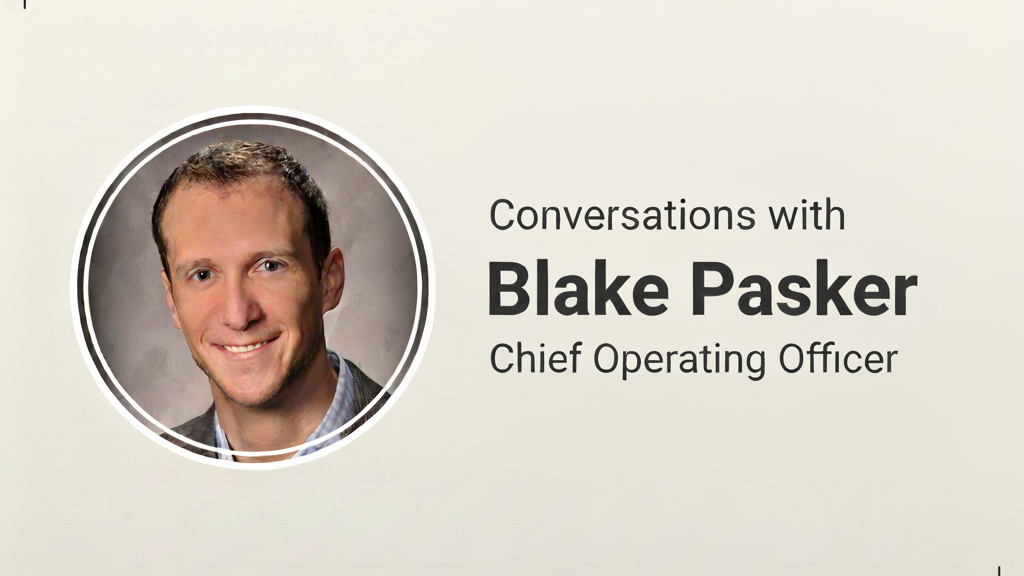
We sat down with Blake Pasker, COO at Carly Foundry, a leader who has spent 25 years of his career leading complex semiconductor/consumer electronics operations at Texas Instruments, 3M, ONTO, and is now turning the page on a new chapter as the leader of a privately owned casting/metal foundry. The most impactful part of our conversation is how he creates conditions where people feel safe to bring ideas, challenge assumptions, and own the solution.
In our conversation, Blake walks through the practical side of that: his “Yes, if…” language shift, Black Ops problem‑solving teams, and health‑of‑the‑organization conversations that turn operators and engineers into the next generation of leaders. He shows how this isn’t “soft” leadership—it’s a performance advantage that sparks innovation, resilience, and long-term results on the P&L and on the plant floor.
Please enjoy this latest issue of “Engineering 365”.
Shaun: Let’s get into your “Yes, if…” framework. Where did that come from, and what did it actually change for you?
Blake: That came out of a real crisis. During COVID, we were making a material used in both COVID testing and 5G chip probe testing. Demand went nuts, and we were asked to double capacity fast.
The first reaction in the room was predictable:
“No, we can’t do this, because we don’t have the people, the budget, the equipment…”
So I changed the rule:
“From now on, you’re only allowed to answer in the format ‘Yes, if…’”
“Yes, if we daisy‑chain these reactors.”
“Yes, if we tap into that existing capex and change the scope.”
“Yes, if we validate this process tweak I’ve had sitting on the shelf.”
Same constraints, same people, but it turned a dead-end into a requirements list. From there, we could build an actual plan, and we did double capacity in weeks, not years.
Shaun: You also used the phrase “Black Ops” problem‑solving. What does a Black Ops team look like in your world?
Blake: Black Ops is my way of saying small, fast, accountable. For that COVID situation, the team had a plant manager, core process engineers, a facilities leader, a product/dev person, and a supply chain leader.
No spectators. Everyone in the room either makes a decision, runs a trial, or moves money. The mission is crystal clear—something like, “Double output on this product in five weeks without compromising quality.” We cut out the noise. You don’t need to wait for a 20‑person alignment meeting to run one experiment.
Shaun: Let’s switch to people. You described something you call “health of the organization” conversations. What does that look like in practice?
Blake: Most companies do performance reviews. Fewer do health of the organization reviews. With my leaders, I sit down and ask four simple questions:
- Where are you right now?
- What are you actually doing day‑to‑day?
- How are you doing?
- What do you want to do next?
Then, with area leaders, we zoom out:
- What’s the real shape of your team?
- Who can move where?
- How does that map to near‑term and long‑term strategy?
You find out who’s miscast, who’s ready for more, and who will leave in 12 months if you don’t create a path.
Shaun: A big theme for you is turning strong technical contributors into leaders. How do you practically do that in the first 6–12 months?
Blake: One VP said something to me early on that I still use. He said, “It’s no longer your job to be the smartest person in the room.” So when I move a technical contributor into leadership, I’m clear:
- Your job is now to teach, not dictate
- Enable your people to generate ideas
- Protect the business from bad decisions, but don’t be the only brain
Tactically, I give them projects where they must lead people, not just solve the technical problem. And I help them reset relationships so operators and engineers feel safe bringing ideas and even failures to them. If people are afraid to be wrong around you, you will never get the real information.
Shaun: You’ve been through big swings—$500M to $680M growth, capacity doubles, product consolidation. What’s one mistake you see COOs make over and over?
Blake: Two, actually. The first thing is waiting for perfect information before moving. In operations, waiting too long is a decision. Start with the 70% you know and adjust. The second is treating manufacturing like a service function instead of a strategic weapon. When we did “one face to the customer” and qualified multiple sites, that’s what unlocked the growth. A COO should be asking, “How can ops create options the business doesn’t even see yet?”